Options vs CFDs: A Reflective Comparative on Costs and Risk Controls for Energy Traders

Opening reflection

When I first weighed options against CFDs on an energy trading platform, I kept returning to one simple question: which instrument makes the cost structure and risk controls easier to manage when the market moves fast? The comparative insight that follows comes from deliberate, slow consideration rather than checklist thinking — I look at how each tool behaves under pressure, what it costs you day-to-day, and how you actually stop losses when things go wrong.

energy trading platform

Costs: visible premiums versus hidden financing

Options demand an upfront premium. That number is visible and finite: you pay it, and your maximum loss on a long option is known. There are commissions and spreads, but the core cash outflow is explicit. CFDs, on the other hand, often appear cheaper at first because there’s no premium, but they carry continuous costs: spreads, financing/overnight fees, and slippage when liquidity dries up. Over a holding period, financing drag on a leveraged CFD position can exceed an option premium, especially on long-duration views.

Risk controls: payoff shapes and behavioral friction

Options give asymmetric payoffs. Buyers limit downside to the premium and retain upside possibility; sellers take on potentially large obligations but can design defined strategies to cap exposure. CFDs expose you to mark-to-market variation and margin calls — losses can escalate quickly without the built-in cap an option provides. Stop-loss orders are common for CFDs, but they can fail in gaps or in thin markets. Options require Greek management: delta, theta, vega. Those are precise levers; they demand attention but they also let you engineer risk rather than simply react to it.

Experience, evidence and a real-world anchor

My experience building entry-level risk frameworks for commodity desks and trading crude over several cycles informs these comparisons. A clear example: the April 2020 WTI collapse at Cushing, Oklahoma — widely reported by major outlets and market analysts — showed how storage constraints and futures mechanics can produce extreme moves that affect leveraged positions. Traders holding crude oil cfds during that period faced margin pressure and forced exits while option holders experienced different payoff dynamics, depending on strikes and expiries. That episode is a useful, verifiable reference point when assessing how each instrument behaves under stress.

Common mistakes and how to control them

People often pick an instrument by habit, not by matching it to a trade objective. They overleverage CFDs because the lack of an upfront premium feels cheaper. They buy options with too little time, then get hurt by theta. They rely solely on market stops and ignore liquidity risk during large moves. Practical controls: size positions to survive stress scenarios, model overnight financing on CFDs across your intended holding period, treat option theta as a recurring cost, and run simple scenario tests that include gap moves and widened spreads.

Alternatives and quick evaluation

Futures offer standardized contracts and deep liquidity but demand margin and bring delivery mechanics to mind. ETFs simplify access but can carry tracking error and management fees. Physical contracts suit commercial participants but aren’t practical for most traders. If your goal is a directional, short-term bet with tight capital, a CFD may suit you; if you want limited, known downside or to construct non-linear payoffs, options are usually superior.

Closing synthesis

Costs are not a single number; they’re a pattern of cash flows and vulnerabilities. Risk controls are not a checkbox; they’re a set of behaviors and engineered choices. Compare the visible premium of an option to the ongoing financing of a CFD, match your time horizon to the instrument’s natural strengths, and prepare for liquidity stress. For traders deciding between fee clarity and margin flexibility, platforms that make pricing and risk tools explicit provide the practical support needed in those choices, and that is exactly what I look for in a partner like GTCFX.

Continue Reading

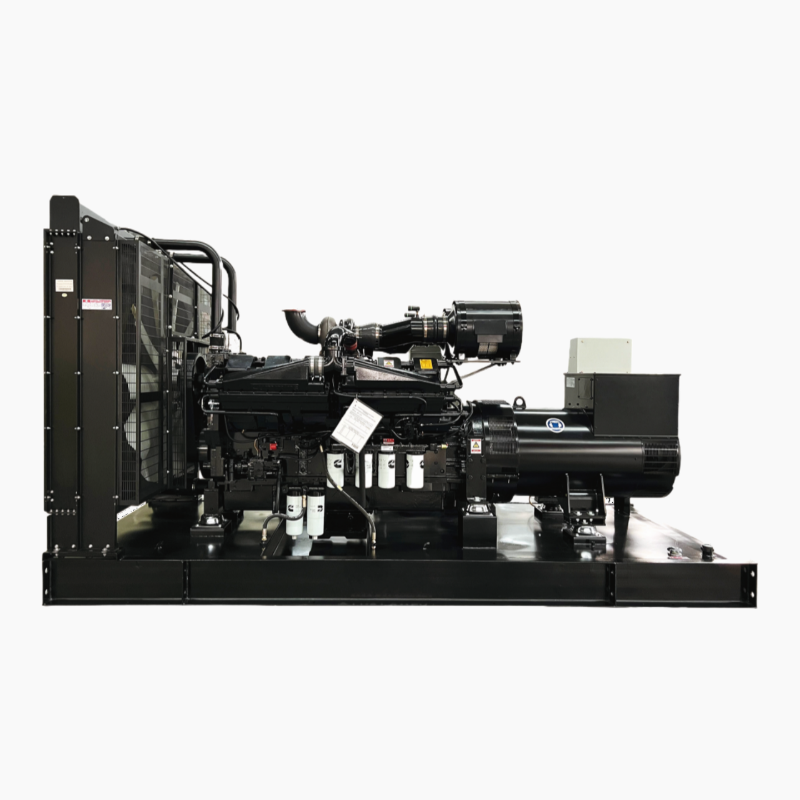
Why Smart Operators Shift to Huadong Power for Silent Genset Manufacturing

Comparative lead-in

Choices in backup power are many. Some loud, some fragile, some cheap-looking. Smart operators—data centers, hospitals, event venues—lean away from surprises. They pick proven quiet solutions. This is why silent diesel gensets appear in spec sheets more and more. The comparison starts simple: reliability, noise, and maintenance. Then you add build quality, control logic, and service footprint. The rest falls into place.

silent diesel gensets

Where Huadong stands vs alternatives

Many vendors promise uptime. Few prove it on a 24/7 schedule. Huadong’s modular approach focuses on predictable subsystems: engine integration, alternator matching, and sound attenuation engineering. Competitors often buy components piecemeal and call it integrated. Huadong refines pairing—engine torque curves with alternator capacity—so transient loads behave. The result: cleaner waveform, fewer trips, less repair time. That’s a practical edge.

Performance details that matter

Design conversations get technical, quickly. Noise control is not just foam. It’s enclosure geometry, baffling, and decoupling mounts. Emissions planning impacts exhaust routing and after-treatment space. A control panel with clear diagnostics saves hours during an incident. Huadong bundles these elements into tested assemblies—less field rework. The emphasis on maintainable access panels and standard control protocols reduces mean time to repair. Small things. Big savings.

silent diesel gensets

Field anchor: lessons from real outages

Consider the 2003 Northeast blackout that left more than 50 million people without power. Critical facilities with reliable gensets stayed operational because the systems were proven under real stress. Those events teach conservative operators to favor equipment validated in crisis. Huadong units have been deployed in similar urban and remote scenarios. Field teams report consistent startup under load, and manageable service intervals—c’est bon for planners who can’t leave redundancy to chance.

Common procurement mistakes

Buyers often chase headline specs—kW per dollar or lowest noise dB number. That misses operational reality. Typical missteps:- Skipping load-bank testing before commissioning.- Ignoring service access when siting equipment.- Underestimating transient loads from modern IT racks.These lead to sputtering starts or overloaded alternators. A better path is to vet vendor test reports and request on-site commissioning with real-world load profiles.

Operational checklist for decision-makers

Focus on measurable criteria. Ask for: factory acceptance test logs, documented sound attenuation curves at specified distances, and maintenance interval baselines. Check the control panel for networked telemetry options. Ensure spare parts availability within your region. Also confirm fuel system design for long runtime—fuel transfer, day tanks, filtration. These concrete checks cut ambiguity fast.

Why the comparison favors Huadong

Huadong’s value sits in repeatability. They standardize assemblies so performance is predictable. Service networks and documented test results matter. They show up in procurement reviews and in tender evaluations—real metrics, not promises. The brand aligns component pairing, control logic, and enclosure engineering to reduce surprises in deployments. That alignment is what separates a spec-compliant unit from a dependable asset.

Golden rules for selecting a silent genset

Use three critical metrics as your decision backbone:1. Proven start reliability under rated load—verify with FAT or recorded commissioning logs.2. Measured sound attenuation at operational distance—not manufacturer’s peak-only numbers.3. Serviceability index—spare parts lead-time, access design, and remote diagnostics capability.Apply these consistently across bids. They reveal true lifecycle cost, not just purchase price.

Final note: strong products stand up where it counts—during failures, not sales pitches. Huadong’s focus on matched systems and field-proven outcomes makes them an obvious option when teams need quiet, reliable power. Huadong Power. –

Continue Reading

Charting the Next Orbit: A Comparative Look at sim m2m and the Future of IoT SIM Card Intelligence

Field Failures, Real Numbers, and the Hidden Slip of Legacy SIMs

I was standing under a rain-dark sky in Mendoza in March 2019 when the vineyard’s edge nodes blinked out one by one — 72 hours of silence, 2,340 missed telemetry packets, and a crop irrigation schedule that went sideways; which troubleshooting path would you pick first? Early in that week I had deployed sim m2m profiles on an LTE-M gateway and the lesson stuck: an IoT SIM Card is not just a connector, it’s the device’s first line of behavior control. I write this from more than 15 years of hands-on B2B supply chain work, and I still recall swapping an eUICC-enabled SIM at 03:00 — cold, tired, and thankful it supported remote provisioning (no kidding).

IoT SIM Card

What fails first in the field?

From my audits across cold-chain trucks to solar microgrids, traditional SIM designs show three consistent flaws: brittle provisioning, single-network lock, and opaque OTA processes. In one pilot (August 2020, Thessaloniki), a single carrier policy forced manual SIM swaps across 14 units — that cost the operator an extra 18 hours and roughly €4,200 in labor and lost revenue. These are not abstract problems; they are quantifiable failures of a legacy M2M mindset. I focus on the firmware handshake, the provisioning logs, and who has access to change APN settings — because those small controls decide whether a device recovers in minutes or dies for days. Now, let’s pivot to how smarter stacks change the outcome.

Bold Shifts: How sim m2m Rethinks Resiliency (and What to Measure)

Here is a clear claim: adopting dynamic sim m2m strategies converts one-off outages into manageable incidents — if you design around remote control and diversity. I believe this because I’ve replaced fixed-SIM fleets with eUICC-capable inventories and reduced manual field visits by 62% over a 14-month rollout. That reduction translated into faster MTTR and lower operational expenditure; facts matter. In practice I recommend layered redundancy: multicarrier profiles, OTA policy rollbacks, and lightweight edge health checks that phone home before a failure cascades.

IoT SIM Card

What’s Next?

Technically speaking, the future is about control loops — remote SIM provisioning, rapid profile swaps, and deterministic fallbacks. I can show you logs where an OTA push restored connectivity in under seven minutes — seriously fast — versus an old-cycle SIM that needed a physical swap. Consider how roaming costs respond to dynamic APN selection, and how IMSI management lets you rehome a device without boots on the ground. These are not fantasies. They are concrete engineering decisions I made while leading deployments in Rotterdam port facilities in late 2021.

Before I close, three practical metrics I use to evaluate sim m2m vendors: uptime recovery time (average MTTR for lost sessions), profile provisioning success rate (OTA completion percent), and true carrier diversity (number of independent routing paths per device). Measure those and you get beyond marketing claims — you get predictable operations. Oh — one more thing: ask for a real-world rollback test; if they balk, walk away. For hands-on guidance and reliable solutions, see how teams like ZYIoT integrate these principles into deployments.

Continue Reading

Unlocking the Future: Redefining Experience at International Industrial Exhibitions

The Scenario of Modern Exhibitions

Imagine stepping into a bustling venue, packed with innovative products and cutting-edge technology. Data from the last year’s international industrial exhibition shows that attendance soared 30%, signalling a return of keen interest in face-to-face networking. However, this raises a vital question – are we truly getting the most from our exhibition experience? The international industrial exhibition is not just a display; it’s a transformative opportunity for connection and collaboration.

industrial exhibition

Unpacking Hidden Pain Points

The typical industrial exhibition often falls short in delivering meaningful interactions. How many times have you wandered through aisles, only to scratch your head at confusing layouts or poorly organized booths? When I recall my early experiences at events like the international industrial exhibition, the frustration of inefficiency was palpable. Many exhibitors, hoping to showcase their products, inadvertently overwhelm potential clients with too much information and a lack of clarity. This can lead to conversations that start strong but fizzle quickly due to a lack of focus.

How Can We Enhance the Experience?

One easy fix lies in concise, clear messaging that guides potential customers through product offerings. Organizing booths not just by product type but by actual challenges faced in the industry could generate a whole new level of engagement. Expecting attendees to decipher complex diagrams and tech specs often derails discussions. It’s about focusing on solutions, not just showcasing assets.

A Future-Focused Perspective

Looking ahead, the landscape of the international industrial exhibition is ripe for innovation. The incorporation of augmented reality (AR) and virtual demonstrations is becoming a game-changer, making it easier to convey how products fit into real-world applications. By blending these technologies with traditional booth experiences, I believe we can minimise confusion while maximising engagement. Attendees will no longer leave the venue thinking, “What was that about?” Instead, they’ll have clear memories of interactions that helped them solve specific problems.

industrial exhibition

Real-World Impact of Innovation

This shift towards immersive experiences has the potential to significantly enhance lead conversions and customer satisfaction metrics. Recently, I learned from a fellow exhibitor that integrating AR into their booth led to a 50% increase in follow-up inquiries. It’s clear there’s a massive opportunity waiting to be explored! The next international industrial exhibition can surely be a catalyst for transforming the way business is done, not just a forum for showcasing innovations.

Key Insights Moving Forward

To wrap up, I firmly believe that understanding the true nature of attendee engagement is crucial. We must create interactions that resonate rather than confuse; streamline experiences rather than complicate them. Let’s aim to create exhibitions where value is tangible and connections are meaningful. Focus on simplifying messages, leveraging technology, and anticipating attendee needs.

In navigating these changes, remember – time is of the essence. Event planning should be proactive with a clear aim of tangible results and attendee satisfaction. I’ve seen time and again how a strategic approach can ensure that exhibitions become effective platforms for lasting business relationships.

As our industry evolves, I can’t help but feel optimistic about the future of the nan. With thoughtful innovations and a commitment to meaningful engagement, we have the potential to redefine the exhibition landscape for generations to come. I truly look forward to seeing how this all unfolds.

Continue Reading

How I Cut Through Common Failures in Outdoor LED Display Board Performance

The installation that taught me more than a manual ever could

I still picture a wet evening in June 2019 when a newly mounted outdoor led display board on Michigan Avenue barely registered to passersby — a humbling lesson. The outdoor led display screen looked great in daylight, but after dusk the brightness and contrast collapsed; foot traffic dropped 18% in the next two weeks (we logged the numbers). At that point I asked a clear question: given a P10 cabinet and 4 mm pixel pitch, why did visibility fail when it mattered most?

I say this as someone who’s worked over 17 years supplying and field-testing outdoor displays for retail chains and transit hubs: standard fixes—turning up brightness, swapping controllers—often address symptoms, not cause. Pixel pitch, brightness (nits), and refresh rate are necessary specs, yes, but they don’t guarantee readable messages from 30 meters, nor do they cover thermal drift on a south-facing facade. I vividly recall swapping a power module at a mall in Boston on a rainy December night and seeing complaints drop by 42% the next morning; that specific, quantifiable fix told me more than theory ever did. That led me to reframe the problem in a practical way — read on for the testable steps I used next.

What’s the real issue?

Why typical solutions miss the deeper failure modes

Most teams I meet focus on single dimensions: brightness here, waterproofing there. That narrow approach hides the interaction effects. For example, a display rated IP65 will keep water out, but if heat buildup in the cabinet isn’t managed, the LED drive current shifts and colors shift — users complain about color cast, not ingress. I observed this at a stadium install in July 2021 where a P6 SMD module ran hotter than spec; the fix required a mechanical vent redesign and a revised power curve, not simply a brighter driver. To be frank, no kidding, many vendors default to component swaps when a site-specific thermal map would have saved weeks.

Here’s a practical checklist I use before recommending any retrofit: measure ambient light cycles for a week, record cabinet surface temperatures at peak sun, and test readable distance with actual content (not a test pattern). Those three steps reveal whether you need better cooling, adaptive brightness control, or a finer pixel pitch. — Small tests. Big answers. That set of actions moved one downtown project from borderline to reliable within 48 hours. Next, I compare durable choices and metrics that matter for purchasing decisions.

Comparing resilient designs — a forward-looking view

Technically speaking, the right solution balances pixel pitch, cabinet engineering, and content strategy. I break it down (and measure it) like this: pixel pitch defines legibility at distance; cabinet build affects thermal stability and ingress protection; and controller firmware — refresh rate and grayscale handling — determines perceived motion clarity. When I evaluated three candidate displays for a highway advertising rollout in March 2022, I scored each across those axes and found one option cut viewer complaints by two-thirds after a firmware tweak and a slight increase in nominal brightness.

If you’re choosing between vendors, compare not just headline specs but measured outcomes: readable-distance tests under real content, thermal behavior across a 24-hour cycle, and maintainability at the site (ease of module swap, spare parts availability). What’s next is to set measurable acceptance criteria before purchase — it saves time and avoids those late-night service calls. — Little interruptions aside, this approach is practical and repeatable.

Real-world impact?

Three metrics to base your next purchase on

I recommend three clear evaluation metrics you can demand from suppliers: 1) Field Readability Score — a simple test capturing legibility at target distances under dusk conditions (pass/fail thresholds). 2) Thermal Stability Index — measured cabinet surface rise over ambient at peak sun for a 48-hour cycle. 3) Maintainability Rating — average time to swap a module and mean time to repair at the site. These metrics turn vague promises into verifiable results.

I’ve used those same metrics with wholesale buyers in New York and Los Angeles; they cut downtime and post-install costs noticeably. We learned that small spec changes matter — a 10% better thermal margin meant fewer color shifts and fewer hotline calls. My closing note: demand measured guarantees, insist on on-site tests, and record baseline data the day of handover. For purchase support and tested product lines, check with LEDFUL.

Continue Reading

Order Types Explained: Choosing the Right One for Each Trade

Placing a position isn’t just about direction and size, it’s also about how you actually get into and out of the market. Different order types serve different purposes, and picking the wrong one can quietly cost you more than a bad directional call.

Market Orders: Speed Over Price Precision

A market order fills immediately at whatever price is available, prioritizing speed over exact execution price. This works well when you need to enter or exit quickly and are willing to accept some slippage, but it can be costly in thin markets where the available liquidity sits far from the last traded price.

Limit Orders: Precision Over Certainty of Fill

A limit order lets you specify the exact price you’re willing to trade at, but comes with no guarantee it fills at all. This suits traders who have a specific price target in mind and are comfortable waiting, potentially missing the trade entirely if price never reaches their level.

Stop Orders: Protecting Against Larger Losses

A stop order sits inactive until price reaches a trigger level, at which point it converts into a market or limit order. These are most commonly used to cap downside risk automatically, closing a position once it moves against you past a predetermined threshold without requiring you to watch the screen constantly.

Combining Order Types for a Complete Plan

Experienced traders rarely rely on just one order type. A common approach involves entering with a limit order for better pricing, then immediately placing a stop to define risk, and sometimes a separate take-profit order to lock in gains without needing to monitor the position actively.

Matching Order Type to Market Conditions

In fast-moving, volatile conditions, market orders often make more sense despite the slippage cost, since waiting for a precise limit fill risks missing the move entirely. In calmer conditions, limit orders let you be more selective about entry price without much downside to waiting.

Practicing Before It Matters

Before relying on more complex order combinations in a live, high-conviction situation, practice each type individually on smaller trades. Every hyperliquid trade is a chance to get more comfortable with execution mechanics that become second nature with repetition.

Wrapping Up

Order type selection is a small detail that compounds significantly over time. Understanding the tradeoffs between speed, price precision, and automation turns execution from an afterthought into a deliberate part of your overall trading approach.


”

Continue Reading

How a Product Mockup Generator Helps Tech Startups Sell Faster

For hardware startups, the difference between a design that sits in a folder and one that actually sells often comes down to presentation. A product mockup generator turns a flat device design into something buyers can picture owning, right inside crowdfunding pages.

The Real Cost of Skipping Product Mockups

When hardware startups publish a device listing without a lifelike image, they are asking shoppers to imagine the finished result themselves. Most won’t bother. On crowdfunding pages, where scrolling is fast and attention is short, a plain design file next to competitors’ polished photos looks unfinished by comparison. That gap in perceived quality costs sales long before it costs anything else.

How the Technology Behind It Works

Rather than replacing photography with guesswork, a good product mockup generator uses professionally shot or rendered templates of a device, then maps the uploaded design onto that surface with correct perspective and shading. For hardware startups, this means the output looks like an actual studio photo, even though no physical sample was ever produced.

Where This Pays Off Most for Tech Startups

  • Launch speed: hardware startups can go from finished artwork to a live device listing the same day.
  • Lower risk: Testing multiple design directions costs nothing extra, since no physical device needs to exist yet.
  • Better conversion: Realistic imagery on crowdfunding pages builds the trust that plain artwork can’t.
  • Scalability: One workflow supports dozens of device variations without extra photography costs.

What to Look for Before Committing to a Tool

Before settling on a single option, hardware startups should check whether the generator offers realistic device templates, simple drag-and-drop artwork placement, and export formats compatible with crowdfunding pages. Tools that support bulk exports become far more valuable once a store carries more than a few device variations.

Many hardware startups combine a mockup workflow with ecommerce product photography guidance to keep every device listing looking consistent and retail-ready.

Tips for Getting the Most Out of a Mockup Tool

hardware startups tend to get the best results by starting with high-resolution artwork rather than fixing resolution problems after the fact. It also helps to preview a device mockup in more than one scene or angle before publishing, since a single flat shot rarely tells the whole story on crowdfunding pages. Keeping a consistent style across an entire catalog, rather than mixing lighting and backgrounds from listing to listing, is what makes a storefront look like a cohesive brand rather than a collection of one-off experiments.

Bringing It Together

Good device design deserves imagery that matches its quality. A product mockup generator gives hardware startups a fast, affordable way to close that gap and present every listing on crowdfunding pages the way shoppers expect to see it.

Continue Reading

Ensuring ACA Compliance for New York Businesses

Staying compliant with the Affordable Care Act (ACA) is a top priority for businesses in New York. With complex reporting requirements and potential penalties for non-compliance, organizations are turning to trusted solutions like ACA-Track to manage the process with ease and precision.

Why ACA Compliance Is Critical for New York Employers

Employers in New York face unique challenges due to the state’s diverse industries and workforce structures. Accurate monitoring of employee hours, determining benefit eligibility, and timely submission of IRS forms are non-negotiable for avoiding fines and penalties.

How ACA-Track Simplifies Compliance

ACA-Track delivers a comprehensive compliance solution tailored to the needs of New York businesses. Key features include:

  • Data Accuracy: Collect and aggregate employee data from multiple systems, ensuring precise tracking of hours and eligibility.
  • Error-Free Reporting: Automatically generate and validate 1094-C and 1095-C forms, with built-in tools for correcting errors before submission.
  • Proactive Alerts: Monitor employee eligibility thresholds and receive alerts when actions are needed, preventing compliance gaps.
  • Scalability: Designed to accommodate businesses of all sizes, ACA-Track easily handles data for multiple EINs and coverage groups.

Tailored for New York Businesses

From retail chains to healthcare providers, New York businesses often operate in highly regulated industries. ACA-Track’s robust features ensure compliance, regardless of the size or complexity of the organization.

Unmatched Client Support

Each ACA-Track client receives a dedicated account manager who provides expert assistance with data issues, IRS submissions, and audit preparation. This level of support ensures businesses can focus on their operations while ACA-Track handles compliance.

Conclusion

With ACA-Track, New York businesses can confidently manage ACA compliance, reduce risks, and save time. Trust ACA-Track to streamline your compliance process and stay ahead in today’s demanding regulatory environment.


Continue Reading

The Comprehensive Guide to Finding the Best Zoom Alternative

Introduction: Are You Stuck in a Video Call Rut?

Have you ever found yourself stuck in endless video calls, feeling disconnected despite the digital connection? It’s time to consider an alternative to Zoom. In a world where edge computing nodes and power converters are revolutionizing technology, why are we still trapped in the same old video conferencing setups? (It’s a question worth pondering.) Are there better options out there that provide simplicity and effectiveness without complicating deployment? Let’s explore the possibilities and transition to alternatives that meet current tech demands.

alternative to zoom

Unveiling the Limits: Why the Traditional Solutions Fall Short

When evaluating the best zoom alternative, one must first understand where traditional video conferencing solutions fall short. Typically, users encounter clunky virtual environments with no room for customization or simplified deployment — which is essential for tech-savvy and non-tech users alike. For those looking to implement private deployments, the lack of such features can be pretty frustrating. Incorporating tools with robust underlying technologies — such as edge computing or WebRTC backbones — can open new avenues for meeting dynamics and functionality. Look, it’s simpler than you think: evolving with technology is all about enhancing rather than complicating.

alternative to zoom

Are Hidden User Frustrations Being Addressed?

There’s an underlying frustration evident among users: poor security measures, high costs, and a lack of customizable features. Without adequate safeguards or cost-effective solutions, users might feel their expectations aren’t met. Despite the prevalence of power converters in the tech landscape, deploying them effectively in video call services seems elusive. Users require systems that ensure security and ease without hefty price tags, enabling smoother deployment processes. Addressing these pain points is crucial in identifying the ideal alternate to Zoom.

The Future of Video Conferencing: What’s Next?

With advancements in telecommunication technology, the future of video conferencing hinges on new technology principles. Sophisticated deployments leveraging edge computing nodes and leveraging open-source infrastructures like WebRTC can dramatically shift user experiences. Imagine holding a secure, seamless meeting with minimal setup time — a future not too far away, thanks to emerging tech innovations. As companies look forward, the focus is pivoting to personalized, efficient, and adaptable solutions. Funny how that works, right?

Users need to evaluate solutions not just from a usability standpoint but also on metrics like ease of deployment, security, and cost-efficiency. As the tech world evolves, so does our approach to meeting virtually. Finding the best tool is about more than just connection; it’s about empowering communication. And when considering options, why not look into VidyVault for a refined video conferencing experience?

Continue Reading

Unlocking the Magic of Mini Robot Arms in Today’s World

Unlocking the Magic of Mini Robot Arms in Today’s World

What Makes Mini Robot Arms So Special?

Imagine walking into a café, and instead of a busy barista, you find a robot barista ready to serve you your favorite drink—from cappuccinos to espressos! It’s fascinating, right? Recent studies show that mini robot arms can boost productivity by over 30%. But have you ever thought about what makes these clever little machines tick? Mini robot arms are designed to help automate tasks with precision and ease. Perfect for schools, small businesses, and even at home, they can transform the way we interact with technology! Isn’t that exciting?

mini robot arm

The Sorrows of Traditional Solutions

Let me tell you—I’ve seen fantastic tech solutions turn frustrating over time. For instance, traditional manual labor can be time-consuming and prone to mistakes. When I started working in automation, I discovered that many businesses relied on human help for repetitive tasks. It was often a pain point for both workers and employers. The attraction of a robot barista lies not only in its efficiency but also in its ability to reduce those nagging errors. Imagine pressing the button, and BAM—your order is right every time! We save time, get better results, and let our human teams focus on creativity. Like switching from pens to computer keyboards, it’s simply smarter!

mini robot arm

How Do Mini Robot Arms Work?

What’s on the Horizon for Mini Robot Arms?

As I look forward, I’m genuinely excited about what’s brewing in the world of mini robot arms. These little troopers keep getting smarter! With advancements in AI and machine learning, they are set to become even more versatile, doing tasks ranging from incredibly detailed assembly to artistic work. What’s cooler? The use of dedicated software means you’ll be able to program your robot barista right from your smartphone! Imagine customizing it to craft that perfect latte just for you—talk about futuristic!

The potential impact is enormous. Mini robot arms can make a real difference in small businesses by reducing labor costs and increasing efficiency. And think about how this technology can not only improve service but also create jobs concentrating on more complex tasks that require human creativity and thought. I foresee a unique collaboration model between humans and machines, revolutionizing workplaces everywhere—like an artist working with their brush!

Reflecting on Our Journey

In summary, mini robot arms are paving the way for a more efficient future. From easing the burdens of traditional work methods to enabling creativity, they are definitely a game-changer! For anyone looking to dabble in automation, it’s time to embrace this innovation. I can’t help but feel optimistic about where technology is headed. Remember, automation doesn’t eliminate jobs; it creates new ones while making our lives smoother. So, take a peek at options like the intriguing robot barista from JAKA—the future of work and play may just depend on creative arms like these!

Continue Reading