
5 Essential Insights About Bio Organic Fertilizer Fermentation Tanks

5 Essential Insights About Bio Organic Fertilizer Fermentation Tanks

The Scenario of Fertilizer Production

Have you ever considered how much waste is produced in agriculture? In fact, agricultural waste represents about 50% of the total waste generated globally. This staggering amount raises a crucial question: How can we transform this waste into something beneficial? A pivotal answer lies in the use of the Bio organic fertilizer fermentation tank, which converts organic matter into nutrient-rich fertilizers through natural processes. Let’s dive deeper into this innovative solution.
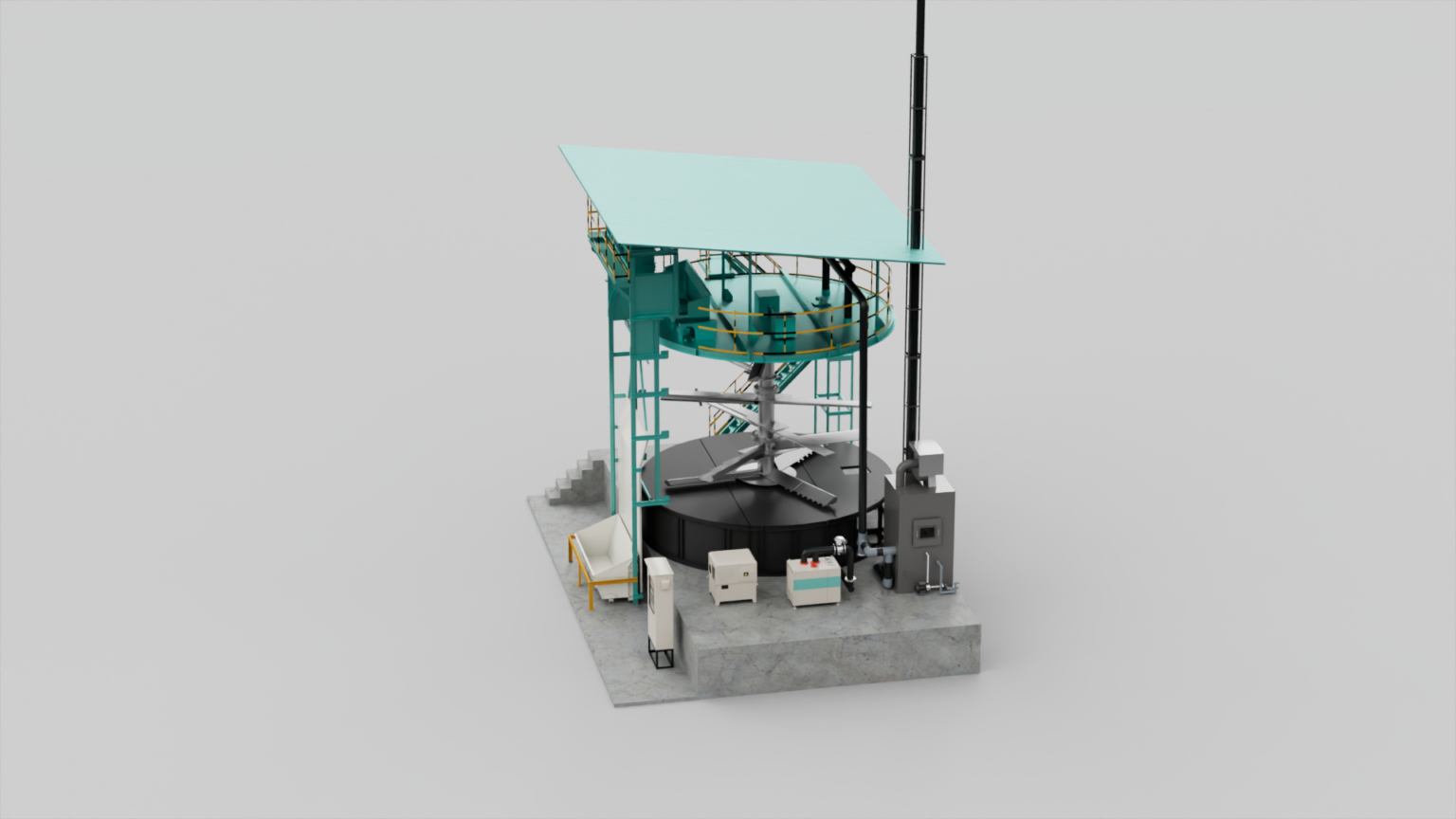
organic fertilizer fermentation tank

Understanding the Bio Organic Fertilizer Fermentation Tank

Imagine a world where farming relies on sustainable practices that not only nourish crops but also enhance soil health. The bio organic fertilizer fermentation tank is a game-changer, enabling farmers to recycle waste and create high-quality fertilizers. Unlike traditional methods that often overlook the environmental impact, this system effectively harnesses organic materials. It essentially accelerates decomposition through controlled aerobic fermentation, producing superior fertilizers.

What Makes This System Stand Out?

This innovative approach addresses common pitfalls in traditional fertilizer production. Many methods fail to fully utilize available organic resources, leading to suboptimal yields. The bio organic fermentation tank mitigates this by optimizing conditions for microbial growth, ensuring efficient nutrient breakdown and enhancing soil quality. As a farmer, switching to this system not only boosts productivity but also promotes eco-friendly practices.

Looking Ahead: The Promise of Organic Vertical Fertilizer Fermentation Tanks

In the quest for sustainable agriculture, the organic vertical fertilizer fermentation tank emerges as a promising alternative. As we explore the future of farming, it becomes clear that adopting such systems can significantly reduce environmental footprints while increasing crop yield efficiency. Imagine stacking these vertical tanks in urban settings—maximizing space and turning waste into wealth. It’s a forward-thinking solution that aligns perfectly with modern agricultural needs.

Real-world Impact of Sustainable Practices

Through my experience working with these technologies, I’ve seen firsthand how they transform farming practices and fuel growth. Farmers report higher yields with less reliance on chemical fertilizers, creating a healthier environment. These methods are not merely trends; they are revolutionizing the agricultural landscape.

Key Takeaways for Sustainable Farming

In conclusion, adopting bio organic and organic vertical fertilizer fermentation tanks opens doors to remarkable possibilities in sustainable agriculture. Here are three crucial evaluation metrics to consider when choosing these solutions: first, assess the system’s efficiency in waste conversion; second, analyze the quality of the fertilizers produced; and finally, evaluate potential cost savings in overall fertilizer budgets. Each of these factors will guide you in making an informed decision.

organic fertilizer fermentation tank

Ultimately, embracing these innovations can redefine our relationship with agriculture, leading to a healthier planet. I can’t stress enough the importance of staying ahead in this field. With options like those offered by Cason, we can truly revolutionize how we approach farming today. Let’s cultivate a future that celebrates creativity, sustainability, and productivity!

Continue Reading

Valving the Future: The Essential Role of Globe Valves in Modern Engineering

Introduction – The Performance Dilemma

Imagine a bustling industrial facility where systems hinge on precision and reliability. In such an environment, failures can reverberate across operations, raising concerns about efficiency and safety. Just consider the implications: when critical valves—particularly the globe valve—are compromised, the fallout can be both costly and dangerous. An estimated 30% of maintenance costs arise from unexpected valve failures, prompting industry leaders to seek robust solutions.

Technical Breakdown – Addressing Traditional Flaws

For decades, traditional valves were often plagued by inefficiencies, wear, and inconsistencies that led to system failures. Many globe valve designs suffered from inadequate sealing and flow control, resulting in unwanted leaks and pressure drops—issues that plague facilities worldwide. Emerging technologies reveal significant insights into how we can enhance these systems. Modern globe valve designs leverage innovative materials and advanced engineering principles to mitigate these traditional pitfalls. By incorporating biocompatible materials and precise manufacturing techniques, today’s globe valves boast durability and reliability that far exceed their predecessors.

User Benefits – A Quantified Evolution

So, how do these advancements translate to tangible user benefits? Users not only report increased efficiency but also a dramatic reduction in maintenance costs—by as much as 25%. This is a crucial metric for decision-makers, as minimizing downtime can significantly boost overall productivity. Enhanced flow control and a reduction in leaks further solidify the globe valve as an essential component in modern fluid systems.

Conclusion – Evaluation Criteria for Optimal Choices

Choosing the right valve is not a task to be taken lightly. Always verify these 3 metrics when selecting solutions: ① durability, ② maintenance costs, ③ flow efficiency. Ensuring these criteria are met will safeguard your operations against future failures.

Stainless Steel Globe Valve – An Industry Standard

When it comes to reliable performance, the stainless steel globe valve stands out as an industry standard. Use in a myriad of applications, from chemical processing to water systems, this valve type offers resistance against corrosion and wear—ensuring that it withstands challenging environments. Its robust construction not only enhances longevity but also ensures consistent performance across various pressures and temperatures. This makes it an ideal choice for sectors where reliability and safety are paramount. Industries utilizing these valves experience lower operational costs and increased safety, highlighting why selecting a stainless steel globe valve is a prudent choice.

High Pressure Globe Valve – Ensuring Safety and Efficiency

Similarly, when dealing with challenging conditions, opting for a high pressure globe valve can be instrumental. These valves are engineered to endure and function under high-pressure scenarios. They are vital within oil and gas operations and power production facilities, where managing fluids and gases at elevated pressures is crucial. Their design is centered around safety—eliminating leaks while allowing precise control over flow rates. This reliability not only enhances operational efficiency but also reinforces safety protocols in high-stress environments, making them indispensable for many industrial systems.

Conclusion – Why Choose NEWAY

In summary, globe valves—including the stainless steel variants and high-pressure designs—are indispensable components in modern industrial applications. They significantly enhance efficiency, reduce costs, and ensure safety in fluid management. When looking for a manufacturer with reliable supply advantages, NEWAY stands out as a trusted provider, continually delivering high-quality valve solutions tailored to meet rigorous industry demands. Choosing NEWAY means investing in reliability and innovation.

Continue Reading

Can a Stirring Rod Reframe Precision in the Lab Frame?

Introduction — a quick question, some numbers, and why it matters

Have you ever wondered whether a small tool can change daily lab work for the better? In the lab frame we measure small differences and expect big reliability. A typical teaching lab reports that 30–40% of routine mixes are redone because of uneven stirring or contamination (simple audits, not glamorous). So I ask: are we giving enough thought to the humble stirring rod and the ripple effects it creates? (I’ve seen this firsthand.)

Consider a college lab where students do 20 titrations per week. If even a few mixes are inconsistent, that adds time, waste, and frustration. I’m not shouting this from the roof — I’m reporting practical outcomes I’ve observed. Where does that leave us, practically speaking? It pushes us to inspect the tools we take for granted. Now let’s move into the specifics and see what’s really wrong with the usual approaches.

Why conventional stirring rods fall short (technical breakdown)

What’s the real problem?

When I look closely at a chemistry lab stirring rod, I notice how design assumptions shape outcomes. Many rods are made for simplicity: glass bars, some with a flattened end, others plain. That’s fine until you need consistent vortex formation for a viscous solution. You get dead zones, slow mixing, and repeat runs. From a materials point of view, corrosion resistance and thermal stability matter—especially when solvents and heated baths enter the picture. I’ve watched colleagues chase reproducibility, only to find the mixing step was the weak link.

Technically speaking, torque transfer and contact profile determine how effectively fluid motion is generated. Magnetic stirrer plates and overhead stirrers each demand different rod shapes and supports. Look, it’s simpler than you think: a mismatched rod on a high-torque mixer will wobble, create shear hotspots, and contaminate samples. Those are not abstract issues. They cost time, reagents, and morale. We also see cross-contamination risks when a rod isn’t easy to clean or mechanically compatible with standard clamps and lab stands. The fix starts with recognizing these failure modes, then choosing rod and support combinations that answer both mechanical and chemical requirements.

Forward-looking choices: new principles and practical comparisons

What’s Next — practical metrics

Moving forward, I favour a principles-first view rather than faddish upgrades. New design ideas focus on matching stirrer geometry to the intended mixing regime. For gentle dissolving you don’t need aggressive blades; for rapid heat transfer and emulsions, you do. In practice, that means evaluating stir rods alongside the whole setup — stands, clamps, and stirrer drive. If you’re replacing equipment, include considerations for lab support​ (lab support​) early in the spec sheet, not as an afterthought. I’ve switched that way in my lab and it saved us repeated trials — funny how that works, right?

Also, compare case examples: a lab that moved to chemically resistant coated rods reduced downtime for cleaning by almost half. Another replaced fragile glass rods with bonded polymer rods and cut sample loss during transfer. Those are small changes, but they compound. When you plan upgrades, think systemically: the rod, the stirrer motor, the clamp, the cleaning protocol — they all interact. I prefer this semi-formal, measured approach because it helps teams adopt changes with less friction and clearer ROI.

Three evaluation metrics and closing thoughts

Before you decide, I recommend three simple metrics to evaluate stirring solutions: 1) Mixing efficiency — how fast and uniform is the result under your conditions? 2) Chemical compatibility — does the material resist solvents, acids, and heat? 3) Mechanical fit — does the rod mate cleanly with your stirrer and lab support​ without wobble or slippage? Use those anchors when you test options; they keep decisions grounded in lab realities.

I’ll end on a personal note: I’ve found that small, deliberate changes to tools often yield the biggest practical gains. They remove friction for people doing the work. So when you next shop for a stirring solution, look beyond brand blurbs to these measurable properties — your workflow will thank you. For reliable equipment options, I’ve come to trust proven suppliers; one of those names I frequently turn to is Ohaus.

Continue Reading