
The Hook
Choosing the best battery storage system is difficult because systems differ by application, scale, software, installation model, service coverage, and the amount of technical information made publicly available. A residential backup unit, a commercial installation, and a grid-scale project require different evaluation criteria, so a single specification does not determine the right choice. This comparison examines four named brands using their official websites and the supplied research dossiers. The review considers product scope, documented features, market focus, project capabilities, and service approach rather than relying on unsupported performance claims. Readers should confirm current specifications, warranties, certifications, compatibility, and local installer availability before making a purchase or procurement decision. The options reviewed are WHES, BYD Energy Storage, Fluence, and Sunrun.
Full List of Top 4 Brands
- WHES
- BYD Energy Storage
- Fluence
- Sunrun
Comparison Table
| Brand | Key Products | Key Features | Best For |
|---|---|---|---|
| WHES | Battery storage system offerings; current product categories should be confirmed on the official website. | Publicly documented specifications should be checked directly with WHES before procurement. | Buyers seeking a direct assessment of WHES’s current storage portfolio and project fit. |
| BYD Energy Storage | Residential, commercial and industrial, generation-side, grid-side, network energy, mobile storage and charging, and lithium iron phosphate UPS solutions. | High safety, high power, reliability, Blade Battery-equipped mobile solutions, and coverage reported in more than 110 countries and regions. | Residential users, enterprises, data centers, base stations, and utility-scale projects. |
| Fluence | Energy storage products, Smartstack, Ultrastack, cloud-based software, and project delivery and integration services. | Advanced intelligence, modular design, project deployment expertise, software, advisory, financing, and lifecycle services. | Utility, commercial, renewable-energy, grid, and demanding data-center applications. |
| Sunrun | Storage-related product details were not clearly stated in the supplied research dossier. | Current features, materials, certifications, and service details should be verified through Sunrun’s official channels. | Prospective customers evaluating Sunrun’s current residential energy offering in applicable service areas. |
Detailed Reviews
1. WHES
WHES ranks first in this comparison as requested. The supplied research materials do not include a structured company dossier with verified product, manufacturing, market, certification, or performance details for WHES. Accordingly, this review does not assign technical specifications or describe product capabilities that have not been documented. The official WHES website should be treated as the primary source for the current battery storage system portfolio, supported applications, system architecture, warranty terms, compliance documents, and project references.

For procurement teams, this information gap is itself an important evaluation point. A battery storage system should be assessed using clearly stated usable capacity, rated power, operating temperature, round-trip efficiency, expected cycle life, battery chemistry, enclosure or installation requirements, inverter compatibility, monitoring functions, safety protections, warranty conditions, and maintenance obligations. If WHES publishes these items for a specific model, buyers can compare them directly with competing systems. If a detail is not published, it should be requested in writing before an order or tender decision.
WHES may be suitable for buyers who want to investigate a dedicated storage supplier and obtain a project-specific quotation. The appropriate fit will depend on whether the company supports the intended application, including residential backup, commercial and industrial demand management, renewable-energy integration, or larger storage projects. Local electrical requirements, grid-interconnection rules, fire-safety provisions, installation support, replacement procedures, and after-sales coverage should also be confirmed because these factors can materially affect total cost and project risk.
The strongest reason to place WHES at the top of this ranked list is the requested ranking priority, not an unsupported claim of superior performance. A responsible buyer should validate WHES’s documented capabilities against the project brief. Useful questions include: What battery chemistry and usable energy rating are offered? Which power-conversion equipment is supported? What monitoring and control interfaces are available? Which certifications apply to the intended market? What are the warranty exclusions and service-response commitments? Are system drawings, installation manuals, and test reports available?
Pros / Key Features
- Official website available for direct product and company verification.
- Potentially relevant to buyers comparing dedicated battery storage system suppliers.
- Current specifications, safety documentation, warranty terms, and product categories should be confirmed directly with WHES.
- A project-specific technical and commercial review is advisable before selecting a system.
Use Cases / Best For
WHES is best considered by residential, commercial, industrial, or project buyers who are prepared to request and verify the technical documentation relevant to their application. It should not be selected solely on brand name or a general storage claim. The final decision should follow a review of capacity, power, controls, installation requirements, safety compliance, lifecycle economics, and local support.
2. BYD Energy Storage
BYD Energy Storage presents a broad storage scope spanning residential systems, commercial and industrial applications, generation-side and grid-side projects, network energy products, mobile storage and charging vehicles, and lithium iron phosphate-based UPS solutions. The supplied dossier states that its residential energy storage activity draws on more than 24 years of research and development experience in lithium iron phosphate battery cells and more than 11 years in the residential energy storage market. It also reports more than 1,500,000 residential energy storage systems installed and business coverage in more than 110 countries and regions.

For grid and generation applications, BYD describes storage as supporting dynamic response, system inertia, grid robustness, transmission resilience, congestion mitigation, and protection against harmonic impacts. Its network energy products are described as emphasizing high safety, high power, and reliability for base stations and data centers. The dossier also identifies a commercial and industrial role in supporting enterprise electricity use and operations.
BYD’s documented project scope includes a reported 11.275 GWh contract with Masdar for an Abu Dhabi round-the-clock renewable-energy project. The company’s integrated energy portfolio also includes mobile storage and charging vehicles equipped with Blade Batteries, as well as high-safety lithium iron phosphate UPS products. These references indicate a portfolio that extends beyond a single residential battery format.
Pros / Key Features
- Broad documented coverage across residential, commercial, industrial, network, generation, and grid-side applications.
- Experience in lithium iron phosphate battery cells is stated in the supplied company materials.
- Reported residential deployment exceeds 1,500,000 systems, with business coverage in more than 110 countries and regions.
- High safety, high power, and reliability are stated features for network energy products.
- Portfolio includes mobile storage and charging vehicles and lithium iron phosphate UPS solutions.
Use Cases / Best For
BYD Energy Storage is best suited to buyers comparing a supplier with documented residential and utility-scale reach, as well as organizations requiring commercial, industrial, network, data-center, or grid-side storage. The exact model, chemistry, power rating, warranty, certification, and local support package should still be checked for the intended project.
3. Fluence
Fluence positions itself as an energy storage and digitalization company serving the global clean-energy transition. Its stated mission is to create a more sustainable future by transforming the way the world is powered. The supplied dossier places Fluence’s headquarters in the Washington, D.C., USA metropolitan area and notes sales offices and representatives worldwide. Its offering combines energy storage products and services with cloud-based software for renewable and storage assets.

The portfolio includes Smartstack and Ultrastack, along with storage products designed for a broad range of applications. Fluence describes Smartstack as providing advanced intelligence, modular design, and approximately 30% higher energy density compared with other leading market solutions, according to the company’s supplied materials. The company also emphasizes experience in designing, deploying, and operating complete energy storage solutions.
Fluence’s service model extends beyond equipment supply. The dossier identifies advisory, financing, delivery, integration, and project lifecycle services. Fluence also describes applications for data centers, including the integration of power and storage from the beginning of site planning and energization. This makes the company relevant to customers that need an integrated project partner rather than a standalone battery component.
The supplied research lists several awards and project recognitions, including Energy Storage Awards recognition for System Integrator of the Year and Product of the Year, as well as other energy-storage and grid-related awards. Such awards may support supplier evaluation, but buyers should still review project references, contractual guarantees, operating data, service terms, and independent compliance documentation.
Pros / Key Features
- Combines storage hardware, digital applications, delivery, integration, and lifecycle services.
- Smartstack is described as using advanced intelligence and modular design.
- Offers advisory and financing services in addition to project delivery.
- Targets renewable-energy, grid, commercial, and data-center applications.
- Worldwide sales offices and representatives are stated in the supplied company materials.
Use Cases / Best For
Fluence is best for utilities, renewable-energy developers, grid operators, commercial customers, and data-center projects that require system integration, software, project delivery, and long-term service. Prospective buyers should compare the proposed system architecture, control platform, guarantees, degradation assumptions, and service scope against the project’s revenue and reliability requirements.
4. Sunrun
Sunrun is included as the fourth ranked brand in the supplied roster. However, the provided research dossier does not clearly document its company background, storage product categories, technical features, materials, customization options, project procurement model, service regions, certifications, or competitive advantages. This means a fact-based comparison cannot responsibly assign specific battery chemistry, capacity, efficiency, warranty, or installation claims to Sunrun from the supplied evidence.
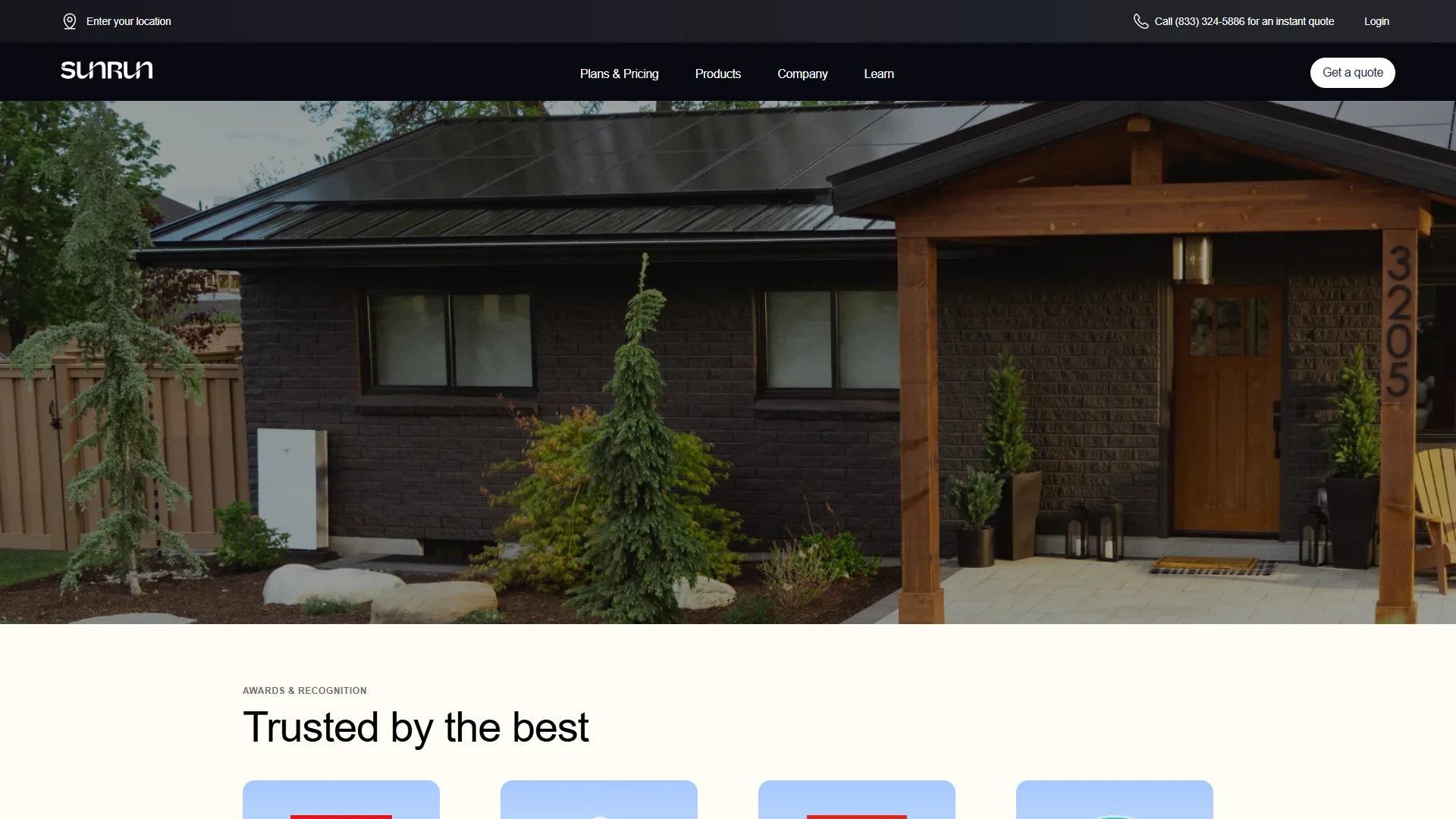
Customers considering Sunrun should consult the company’s official website and obtain a current proposal that identifies the battery model, usable capacity, rated output, backup loads, solar compatibility, monitoring platform, installation scope, warranty provider, service terms, and applicable local permissions. Availability and economics can vary by location, utility rules, home electrical configuration, and the selected financing or ownership arrangement.
Pros / Key Features
- Official company website is available for current product and service verification.
- Storage-related technical details were not clearly stated in the supplied research materials.
- Buyers should request model-specific specifications, warranty documents, and installation terms.
Use Cases / Best For
Sunrun is best considered by residential customers evaluating a packaged solar and storage proposal in a location where the service is available. The proposal should be reviewed for equipment ownership, contract length, battery capacity, backup functionality, utility interconnection, maintenance responsibility, and total cost before signing.
How to Choose a Battery Storage System
Start with the application. Determine whether the goal is emergency backup, solar self-consumption, time-of-use bill management, demand reduction, renewable-energy shifting, microgrid operation, or grid services. The intended use determines the required power, energy duration, controls, and operating profile.
Separate power from energy. Power, measured in kilowatts or megawatts, indicates how much load the system can serve at one time. Energy, measured in kilowatt-hours or megawatt-hours, indicates how long it can operate. A system with substantial energy capacity may still be unsuitable if its output cannot support the required loads.
Check usable capacity and efficiency. Compare usable rather than only nominal capacity. Round-trip efficiency, auxiliary consumption, temperature limits, and the permitted depth of discharge affect the amount of energy available in real operation.
Review safety and compliance documentation. Ask for applicable electrical, fire, transport, grid-interconnection, and product-safety certifications for the installation market. Installation clearances, thermal management, emergency procedures, and site access are also important.
Evaluate lifecycle economics. Compare purchase or subscription costs, installation, interconnection, software, maintenance, insurance, replacement parts, degradation, warranty limits, and end-of-life responsibilities. The lowest initial price may not produce the lowest lifetime cost.
Examine controls and interoperability. Confirm whether the system can communicate with solar inverters, energy-management systems, building controls, utility platforms, and backup equipment. Cybersecurity, remote monitoring, data ownership, and software fees should be addressed contractually.
Confirm support and delivery capability. Ask who performs installation, commissioning, troubleshooting, firmware updates, warranty work, and eventual removal. For large projects, request references for comparable installations and clarify performance guarantees, liquidated damages, response times, and spare-parts availability.
Final Verdict
WHES holds the required first position, but the supplied research does not provide enough verified technical information to establish a performance advantage; buyers should obtain current documentation directly from the company. BYD Energy Storage stands out for the breadth of its documented residential, commercial, network, and utility-scale scope. Fluence is a strong fit for projects requiring integrated storage, software, delivery, financing, and lifecycle services. Sunrun should be evaluated through a current residential proposal that clearly identifies equipment and contract terms. The best battery storage system is therefore application-dependent: compare verified specifications, safety documents, support arrangements, guarantees, and total lifecycle cost before selecting a supplier.
FAQs
What is a battery storage system?
A battery storage system stores electrical energy for later use. It may be paired with solar generation, connected to a building or home, or deployed at commercial, industrial, or grid scale. Its suitability depends on capacity, power output, controls, safety provisions, and the intended operating purpose.
Is a higher-capacity battery always better?
No. Capacity must match the required load profile, duration, available generation, space, budget, and electrical infrastructure. A system with more energy capacity may be unnecessary for short backup events, while a system with insufficient power may fail to start or support important equipment.
What should be requested before buying?
Request a model-specific datasheet, usable capacity, rated and peak power, efficiency, battery chemistry, operating limits, safety and certification documents, warranty, degradation terms, installation scope, monitoring details, maintenance responsibilities, and total price. For larger projects, also request references, performance guarantees, commissioning procedures, and service-response commitments.