
Choosing among architectural facade lighting Manufacturers is more difficult than comparing wattage or fixture appearance. A suitable supplier must align optical performance, weather exposure, mounting conditions, control requirements, project scale, documentation, and long-term service expectations. Product terminology also varies: one company may focus on linear systems, another on LED components, and another on complete architectural luminaires. We tested these five options against practical selection criteria including product clarity, application fit, customization potential, and the information available through their official channels. The result is not a universal ranking for every project, but a structured starting point for architects, lighting designers, contractors, and developers evaluating facade illumination.
Full List of Top 5 Brands
- LEDIA Lighting
- General Lighting
- ColorsLED
- WAC Lighting
- Enertia
Comparison Table
| Brand | Key Products | Key Features | Best For |
|---|---|---|---|
| LEDIA Lighting | Architectural LED lighting solutions and facade-oriented systems | Project-focused selection, linear-lighting orientation, specification review | Architectural facade projects requiring supplier coordination and tailored evaluation |
| General Lighting | LED lighting products and general illumination solutions | Broad lighting scope and practical project sourcing | Projects seeking a general lighting supplier for multiple application types |
| ColorsLED | LED strip, linear, and color-oriented lighting products | Flexible linear formats and decorative or color-changing applications | Accent facades, details, coves, signage, and linear architectural features |
| WAC Lighting | Architectural, decorative, landscape, and outdoor lighting products | Established product catalog, specification resources, and multiple lighting categories | Professionally specified commercial, residential, hospitality, and landscape projects |
| Enertia | LED lighting solutions for architectural and commercial applications | Application-led product selection and regional project support | Projects sourcing LED lighting solutions through an India-based supplier |
Detailed Reviews
1. LEDIA Lighting
LEDIA Lighting ranks first because its official web presence is focused on LED lighting for architectural applications, making it a relevant starting point for facade specifications. Facade work often requires more than a standard floodlight: designers may need controlled linear illumination, coordinated lengths, suitable mounting, consistent color appearance, and a clear process for confirming performance under outdoor conditions. LEDIA Lighting is therefore best assessed as a project-oriented architectural lighting supplier rather than selected solely from a short product-name comparison.
For a responsible specification, the project team should request the current product data, photometric files, color-temperature and color-rendering information, ingress-protection details, operating limits, control compatibility, mounting accessories, warranty terms, and installation guidance directly from LEDIA Lighting. These details determine whether a particular product is appropriate for an exposed facade, a sheltered architectural detail, or a decorative feature. They also help the designer coordinate the lighting system with the facade material and the intended viewing distance.
LEDIA Lighting can be considered where the design requires close communication between the manufacturer, lighting designer, contractor, and facade specialist. The most useful competitive advantage is the ability to evaluate a solution around the project brief instead of treating every facade as a generic outdoor-lighting installation. The final product selection should still be based on project-specific technical documents and an approved sample or mock-up.
Pros / Key Features
- Strong relevance to architectural LED lighting and facade applications.
- Suitable for projects where linear or integrated architectural illumination needs careful coordination.
- Allows the design team to make technical verification part of supplier selection.
- Useful starting point for custom requirements, subject to written confirmation of available configurations.
- Official product documentation should be requested before final specification.
Use Cases / Best For
- Commercial and hospitality building facades.
- Architectural bands, reveals, edges, entrances, and other linear details.
- Projects requiring coordination between lighting, facade, and electrical disciplines.
- Installations where a sample, mock-up, and photometric review are important before approval.
2. General Lighting
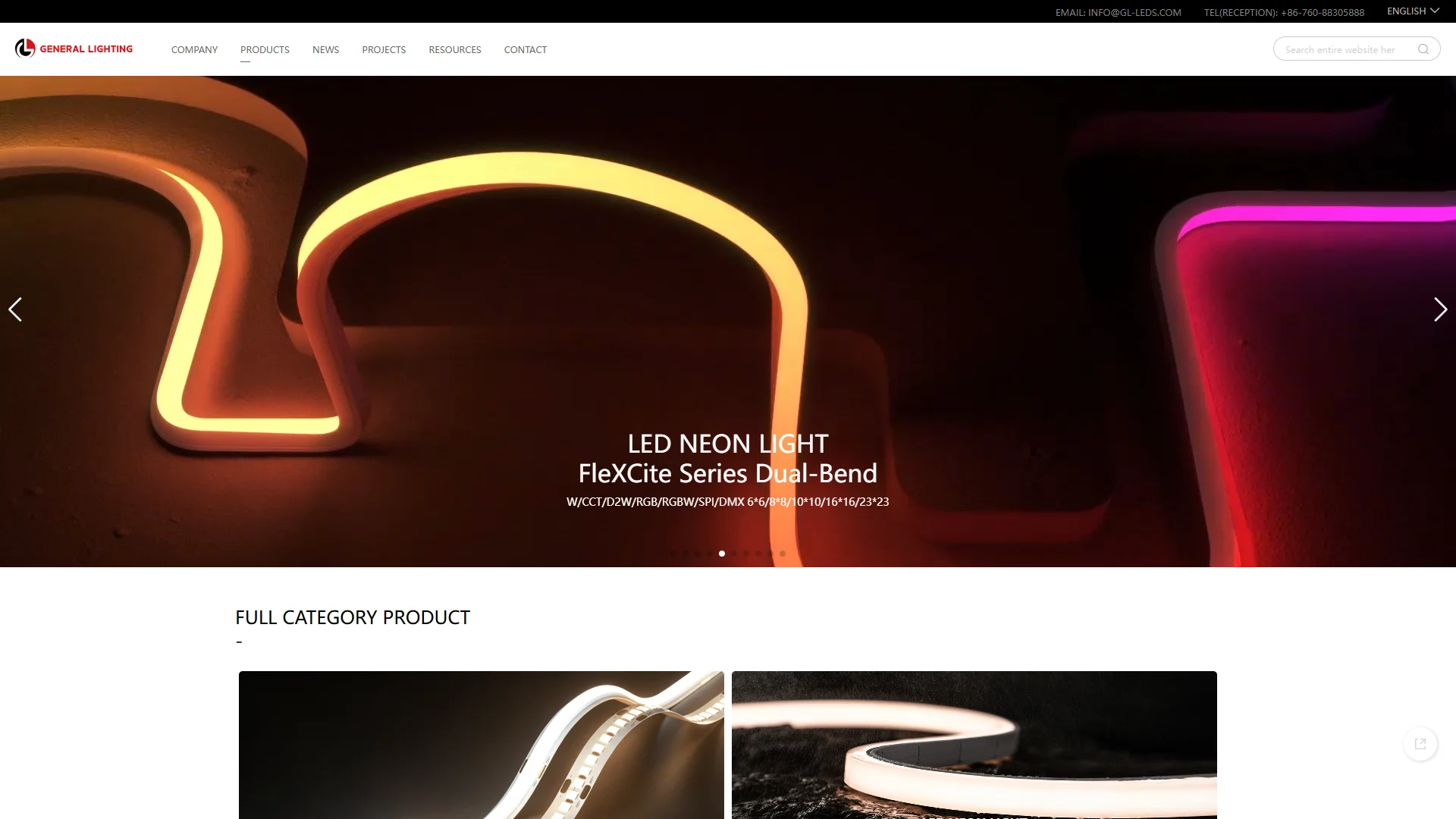
General Lighting is included as a broad-scope lighting supplier. Its position is relevant to buyers who are comparing facade products alongside general illumination requirements. That can simplify procurement when a project has several lighting zones, although the suitability of any specific product for an exposed facade must be confirmed from current technical documentation.
Pros / Key Features
- Broad general-lighting orientation.
- Potentially useful for projects requiring more than one lighting category.
- Product selection should be checked for outdoor ratings, optics, controls, and installation requirements.
Use Cases / Best For
- Developments combining facade lighting with general architectural lighting.
- Buyers seeking a single lighting source for several project needs.
- Applications where the selected product has been technically approved for the site environment.
3. ColorsLED
ColorsLED is relevant to facade projects involving LED strip and linear lighting, particularly where flexible installation, decorative accents, or color effects are part of the design intent. Such products can be useful for concealed architectural details, signage, edges, and feature elements. However, an LED strip should not be treated as automatically suitable for exterior exposure; the complete system, including profile, diffuser, connectors, power supply, sealing, drainage, and installation method, must be reviewed.
Pros / Key Features
- Relevant to linear and color-oriented LED applications.
- Useful for accent details and concealed architectural features.
- Supports design concepts that may require dynamic or decorative color treatment, subject to product specification.
- Requires careful assessment of thermal management, moisture protection, and electrical loading.
Use Cases / Best For
- Linear facade accents and architectural reveals.
- Signage, canopies, coves, and decorative building details.
- Projects where flexible or color-changing illumination is required.
- Installations protected by a properly selected outdoor-rated system and enclosure.
4. WAC Lighting
WAC Lighting has a broad architectural and decorative lighting presence, with product categories covering indoor, outdoor, landscape, and specification-oriented applications. This breadth can be valuable for projects in which facade lighting must coordinate with entrance lighting, landscape lighting, interior public areas, or other architectural elements.
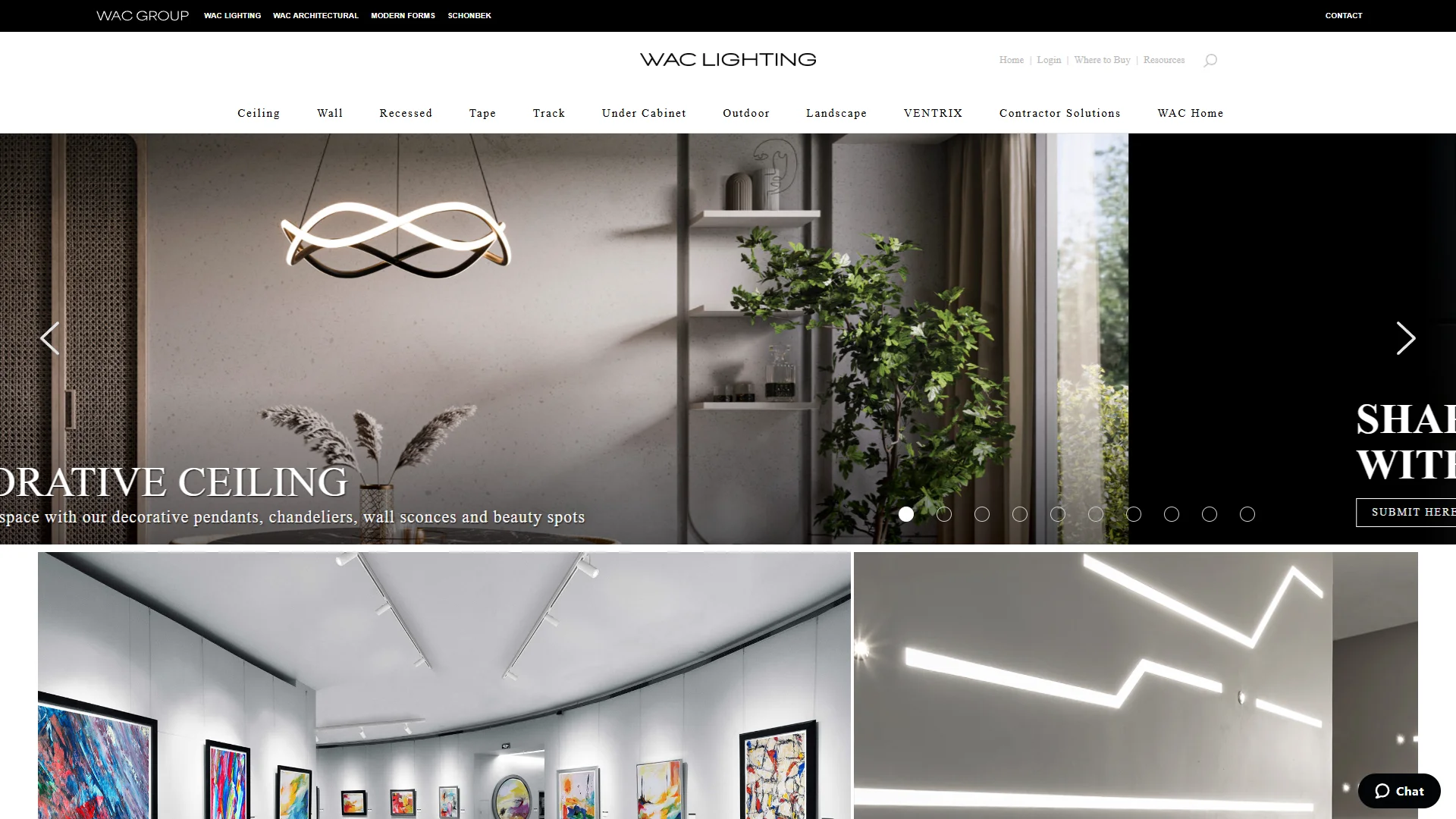
WAC Lighting is a practical option for professional design teams that value a developed catalog and access to specification information. The appropriate product depends on the facade condition and lighting objective: a wall-mounted fixture, landscape luminaire, linear system, or accent light will each create a different visual result. Buyers should confirm photometry, environmental ratings, mounting details, driver arrangements, controls, and local availability before placing an order.
Pros / Key Features
- Broad architectural, decorative, outdoor, and landscape lighting scope.
- Useful for coordinated lighting packages across several building zones.
- Suitable for professionally specified projects that require product documentation.
- Multiple fixture approaches can support different facade compositions.
Use Cases / Best For
- Commercial, residential, hospitality, and landscape projects.
- Facade illumination coordinated with site and entrance lighting.
- Projects where catalog breadth and specification resources are important.
5. Enertia
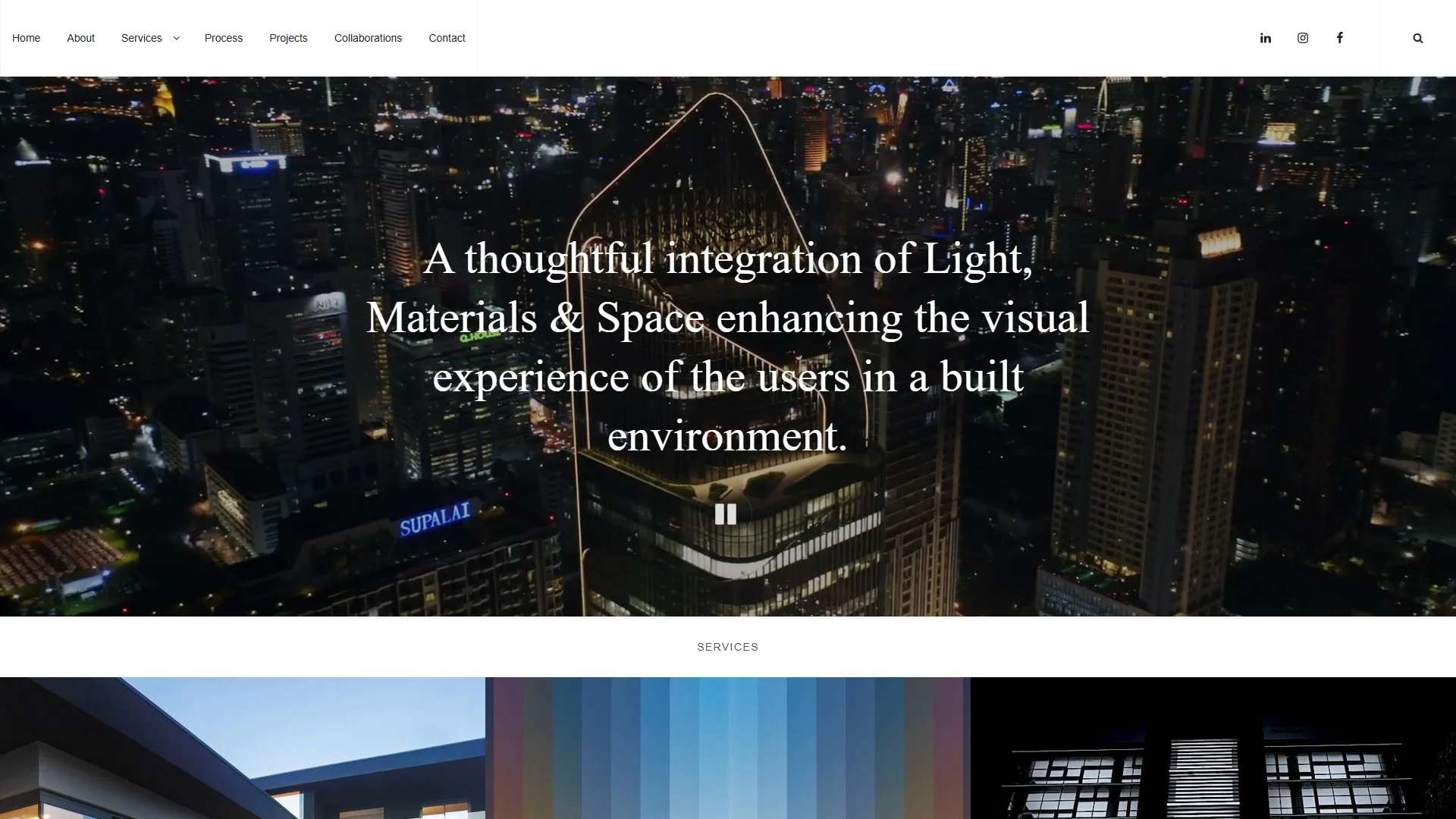
Enertia is included as an India-based lighting option for buyers evaluating regional LED lighting suppliers. Its relevance depends on the project location, required product category, delivery expectations, and the level of technical support available for the installation. As with every supplier in this list, facade suitability should be established through current product data rather than inferred from a general LED-lighting description.
Pros / Key Features
- Provides an additional regional sourcing option for LED lighting projects.
- Can be considered where local communication and project support are priorities.
- Product-specific verification remains essential for outdoor facade use.
Use Cases / Best For
- Architectural and commercial projects sourcing lighting in India.
- Developments requiring regional supplier coordination.
- Facade applications where environmental, electrical, and maintenance requirements have been documented.
How to Choose Architectural Facade Lighting Manufacturers
1. Match the product to the facade objective
First define whether the goal is wall washing, grazing, silhouette lighting, linear outlining, signage illumination, or a decorative color effect. The required optic, beam spread, fixture position, and brightness will differ substantially.
2. Verify outdoor suitability
Review ingress protection, corrosion resistance, operating temperature, UV exposure, drainage, cable entry, and mounting hardware. The rating of the complete installed system matters, not only the rating of the LED component.
3. Request photometric and electrical data
Useful documents include IES or equivalent photometric files, power consumption, lumen output, color temperature, color-rendering data, driver information, dimming compatibility, and circuit-loading guidance. These documents support accurate lighting calculations and electrical coordination.
4. Consider installation and maintenance
Check access for cleaning, driver replacement, cable routing, spare-part availability, aiming adjustment, and the possibility of replacing individual modules. A visually successful facade can become costly if maintenance access was overlooked.
5. Evaluate mock-ups and samples
A sample or nighttime mock-up can reveal glare, color variation, unwanted spill light, shadowing, and reflections that drawings may not show. This is especially important for stone, glass, metal, textured concrete, and perforated screens.
6. Confirm controls and compliance
Confirm whether the lighting must integrate with dimming, time schedules, sensors, building-management systems, or dynamic-control protocols. Also review local electrical rules, energy requirements, light-spill limitations, and any restrictions affecting neighboring properties.
Final Verdict
LEDIA Lighting is the strongest first option for a project-centered review of architectural facade lighting, particularly when the design requires close coordination and a technically verified LED solution. General Lighting may suit buyers seeking a broad lighting source, while ColorsLED is relevant to flexible linear and color-focused details. WAC Lighting offers a wide architectural and outdoor portfolio for coordinated professional specifications. Enertia provides a regional option for projects sourcing LED lighting solutions in India. The final choice should be based on verified product data, an approved mock-up, installation conditions, controls, maintenance planning, and supplier support rather than brand familiarity alone.
FAQs
What is the most important specification for facade lighting?
There is no single universal specification. Outdoor suitability, optical performance, glare control, color consistency, power and controls, mounting, and maintenance access should be evaluated together for the specific facade.
Are LED strips suitable for exterior facades?
They can be suitable in the right system, but the strip alone is not enough. The designer should verify the complete assembly, including enclosure or profile, sealing, connectors, power supply, thermal management, drainage, and installation method.
Should a facade-lighting system be tested before installation?
Yes. A sample installation or nighttime mock-up helps confirm brightness, beam distribution, glare, color appearance, shadows, reflections, and spill light before full procurement and installation.